
TL;DR
- AEO, answer engine optimization, is the practice of structuring content so a search engine or assistant can lift it as the direct answer to a question
- GEO, generative engine optimization, is the practice of getting a business named and cited inside answers written by AI tools such as ChatGPT, Perplexity, Gemini and Google AI Overviews
- AEO grew up around featured snippets and voice assistants; GEO is the newer name for the same instinct applied to generated answers
- The groundwork is largely shared: question-shaped pages, a direct answer first, schema that matches the visible copy and a business described consistently everywhere
- If you are looking for an AEO agency, a GEO agency does the same work and should report on citations, not rankings: see our generative engine optimization agency page
What is AEO? AEO stands for answer engine optimization: shaping your content so that when someone asks a question, a search engine or assistant can take your page and give it as the answer. The term has been around since featured snippets and voice assistants made “the one answer” a prize worth winning. Now that ChatGPT, Perplexity and Google AI write answers of their own, a second term has joined it: GEO, generative engine optimization.
I run Clever Merchants, a Dublin AI consultancy that does GEO work for owner-managed businesses, and owners who have been pitched both terms often ask me which one they need. This guide explains each term, where they differ, where they are really the same job, and what to ask before you pay anyone for either. There are no invented statistics here: where I give a figure, it is either linked to its source or comes from our own checks, and I say which.
What is AEO (answer engine optimization)?
AEO is optimising content so an answer engine can extract it as the direct answer to a question, as in a featured snippet or a voice assistant reply.
An answer engine is any system that responds to a question with an answer rather than only a list of links. For years the main examples were Google’s featured snippets, the boxed answer above the results, and voice assistants that read one answer aloud. Google’s own documentation on featured snippets explains that its systems decide whether a page makes a good featured snippet, and that you cannot mark up a page to make it one. What you can do is make the answer easy to find and easy to lift.
That is the heart of AEO:
- Question-shaped headings. A heading that is the question a buyer actually asks.
- The answer first. One or two plain sentences that answer the heading directly, before any detail.
- Structure a machine can read. Lists, tables and FAQ sections, with structured data that describes the page honestly.
- One clear topic per page. So there is no doubt which question the page answers.
What is GEO (generative engine optimization)?
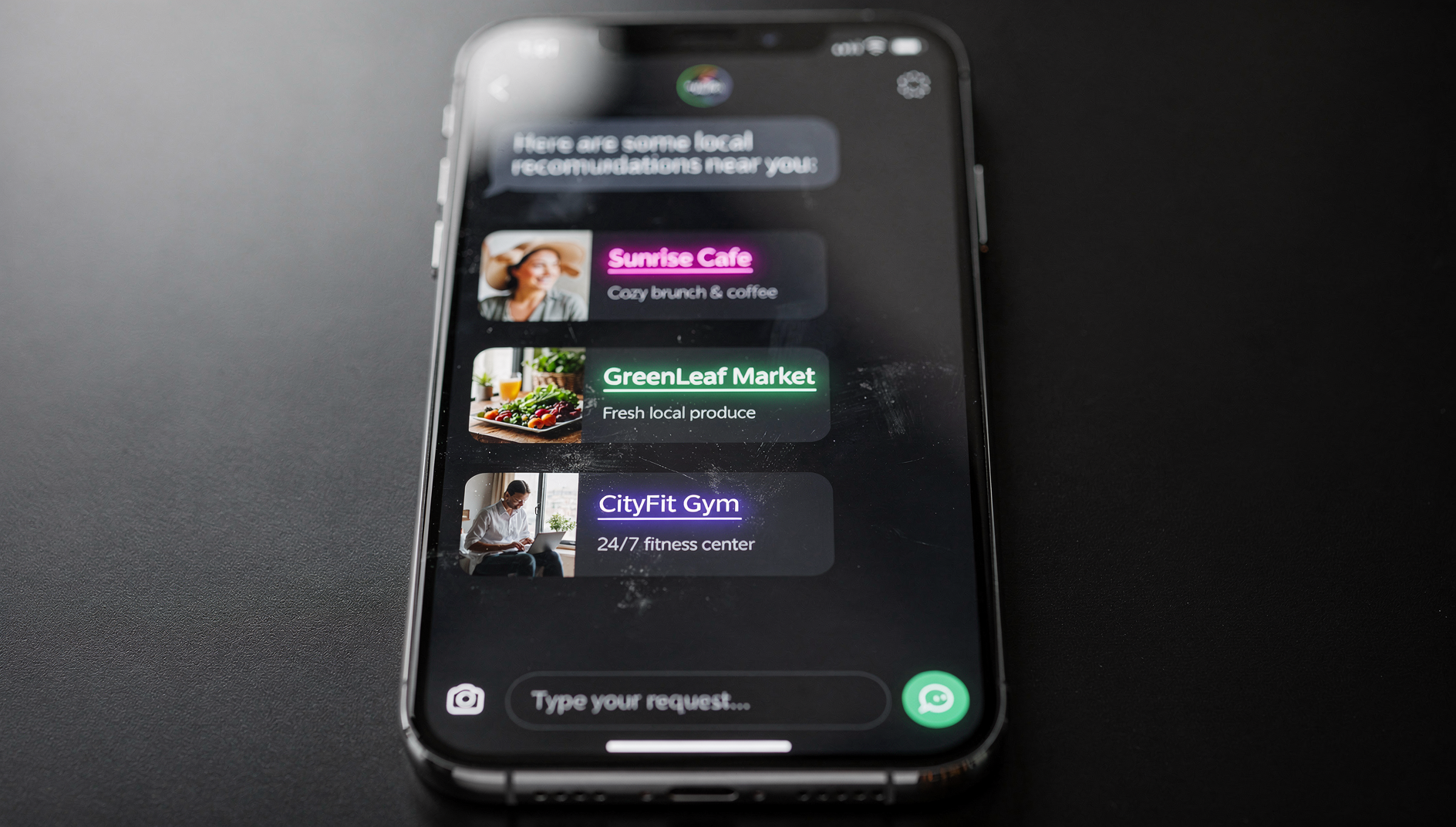
GEO is the work of getting a business named and cited inside the answers that AI tools write, not just ranked in a list of links.
The term comes from a 2023 research paper, GEO: Generative Engine Optimization, by researchers at Princeton and collaborators, which tested how changes to web content affect whether generative search engines cite it. In practice, GEO covers ChatGPT, Perplexity, Gemini, Copilot and Google’s AI Overviews and AI Mode.
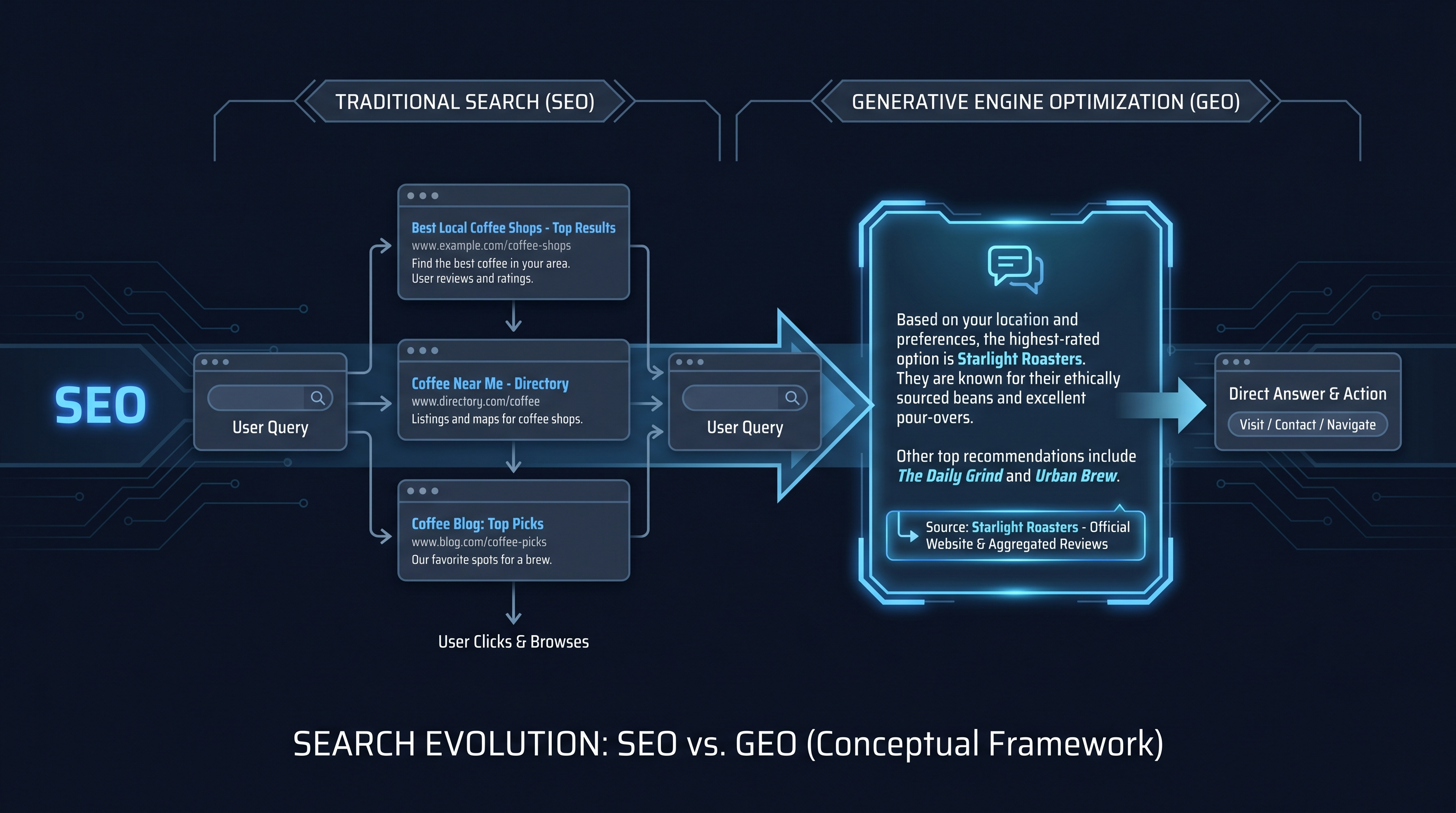
The difference from classic AEO is what the engine does with your page. A featured snippet quotes one source. A generated answer reads several, writes its own summary and names a handful of businesses or sources. So GEO cares not only about being extractable but about being trusted and corroborated: the business described the same way on its own site, its Google Business Profile, directories and the third-party pages the engines already rely on. A fuller explanation is in our guide to what GEO is.
AEO vs GEO: what is the difference?
AEO aims to be the single extracted answer; GEO aims to be one of the few sources an AI names in a written answer. The groundwork overlaps heavily.
| AEO (answer engine optimization) | GEO (generative engine optimization) | |
|---|---|---|
| Grew up around | Featured snippets, voice assistants, People Also Ask | ChatGPT, Perplexity, Gemini, Google AI Overviews and AI Mode |
| What the engine does | Quotes or reads out one answer | Reads several sources and writes its own answer |
| What winning looks like | Your text shown as the answer | Your business named, often with a link as a cited source |
| Main levers | Question headings, direct answers, lists, tables, FAQ schema | All of AEO, plus entity consistency and third-party corroboration |
| How it is measured | Snippet and People Also Ask appearances | Mentions and citations for a fixed set of buyer prompts |
| Overlap with SEO | High: snippets come from pages that already rank | High: AI answers draw on pages search engines can crawl and index |
Put simply, GEO is AEO with more sources in play. Everything that makes a page a good direct answer still helps. What GEO adds is the work of making the engine confident enough to name you, which depends as much on what other sites say about you as on your own pages.
Is AEO the same as AI SEO or GEO?
In everyday use, mostly yes. Buyers use AEO, GEO, AI SEO and LLM SEO for the same goal: being the answer, or in it, when someone asks AI.
The labels have not settled. Some agencies say AEO for everything, some say GEO, and many buyers simply search for AI SEO. The useful question is not which acronym a supplier uses but what it will report on at the end. If the report shows rankings and traffic only, the work is traditional SEO, whatever it is called. If it shows the prompt, the engine and an answer with your business in it, it is AEO or GEO in the sense that matters. We set out how this all relates to ordinary search on GEO vs SEO.
Google’s guidance on AI features and your website is worth reading here. It says there are no extra requirements or special optimisations needed to appear in AI Overviews or AI Mode beyond the same foundations that make a page eligible for ordinary search results. That is a useful check on anyone selling a secret AEO formula: the foundations are public, and the work is doing them thoroughly.
What does AEO and GEO work involve in practice?
Answer the real questions directly on your own pages, mark them up honestly, keep your business details consistent everywhere, and earn mentions on sites the engines trust.
This is the order we work in on client programmes:
- Agree the prompts. A written list of the questions buyers actually ask, such as “who is the best electrical wholesaler in Dublin?”, tested on ChatGPT, Perplexity and Google AI before any work starts.
- Fix the pages that should answer them. Question-shaped H2s, a 20 to 25 word answer first, a table where comparison helps and an FAQ whose questions and answers match the structured data word for word.
- Make the business one entity. The same name, address, description and category on the website, Google Business Profile, LinkedIn and directories. Contradictions give an engine a reason to leave you out.
- Build the third-party footprint. Accurate listings and mentions on the pages engines already cite for your category.
- Rerun the same prompts. Compare before and after, with screenshots.
The first-party proof we point to is our own business. Shamrock Electrical, the electrical wholesaler I also run, was cited by ChatGPT 72 hours after its schema and FAQ content went live. That is one example, not a promise, but it shows how quickly an engine can pick up a page once the answer is clear.

Why does AEO matter more now than it did?
Because more searches now end in an answer. In our own check on 13 September 2026, Google showed an AI Overview on 60 of 72 AI consulting searches across six countries.
That check ran the same 12 searches in each of six countries, Ireland, the UK, the United States, Canada, Australia and New Zealand, all in our own category, so treat it as a snapshot of one market rather than a figure for every industry. It still makes the point: the answer box is no longer occasional. When most searches in a category open with an AI answer, being in that answer matters as much as being in the links below it, and the groundwork for both is the same AEO work described above.
Do you need an AEO agency?
Only if you cannot do the groundwork yourself. If you hire, an AEO agency and a GEO agency are the same purchase; judge them on the citation report.
A capable in-house marketer can do much of the page-level AEO work with the steps above. Where an agency earns its fee is in the parts that take time and tooling: running a fixed prompt set across several engines, fixing entity inconsistencies across dozens of profiles, and building the third-party footprint. Before you hire an AEO agency, ask:
- Which prompts will you track, on which engines, and will I see the answers before and after?
- Do you add FAQ schema only where the questions and answers are visible on the page?
- How will you make my business consistent across my website, Google Business Profile and directories?
- What happens if I am still not cited after the work?
Our answers are on the generative engine optimization agency page: three fixed-price programmes, 21 working days each, with a 90-day citation guarantee and a verification report of screenshots. A longer checklist for comparing agencies is in what to look for in a generative engine optimization agency.

Frequently asked questions
What does AEO stand for?
AEO stands for answer engine optimization: structuring content so a search engine or AI assistant can use it as the direct answer to a question.
What is the difference between AEO and SEO?
SEO aims to rank a page in a list of links. AEO aims to have your content used as the answer itself. AEO builds on SEO, because answers are drawn from pages search engines can already crawl and index.
Is GEO replacing AEO?
Not replacing so much as absorbing. As AI tools write more of the answers, the AEO basics carry over and GEO adds entity consistency and third-party corroboration. Many agencies now use the terms interchangeably.
Does FAQ schema help with AEO?
It helps engines understand a page, as long as the marked-up questions and answers appear on the page word for word. Schema describing questions that are not visible misrepresents the page, so we treat matching visible copy as a rule.
How do I check whether AI tools already cite my business?
Ask ChatGPT, Perplexity and Google the questions your buyers ask and note who is named. Our free AI Visibility Check does this for your category and sends you a report within 24 hours.
Where to start
Pick five questions your best customers ask before they buy, and make sure one page on your site answers each of them in its first sentence. Then see where you stand today with the free AI Visibility Check. If you would rather have the work done for you, the GEO and AEO programmes are fixed price, each runs 21 working days and carries a 90-day citation guarantee.