
TL;DR
- Shopify is worth it for most small businesses selling physical products online, because it handles hosting, checkout, payments and security for one monthly fee
- In Ireland the Basic plan is €32 a month, or €24 a month paid yearly; in the US it is $39, or $29 paid yearly
- On a €100 online card sale, Shopify Basic with Shopify Payments takes €2.25, against roughly $9.95 on a $100 Etsy sale before ads
- The real downsides are app costs that creep up, a fixed URL structure, a basic blog and a fee if you use another payment provider
- It is not worth it for service businesses, content-led sites or sellers still testing whether anyone will buy
- If you would rather not set it up yourself, our Shopify store setup service builds it for you
Is Shopify worth it? I get asked that more than any other ecommerce question, and I have a better vantage point than most reviewers: I work in Shopify every day. For six years I have run the website, the Shopify store and the marketing for Shamrock Electrical, an electrical wholesaler with a trade counter in Rathcoole, Dublin. This post is the answer I give business owners, with the real 2026 prices, what Shopify takes from each sale, where it falls short, and when you should pick something else.
Is Shopify worth it in 2026?
Yes, for most small businesses selling physical products online. It costs more per month than a DIY site, but it saves the time and risk of running checkout yourself.
What you are paying for is everything that is not your product: hosting that does not fall over on a busy day, a checkout that buyers already trust, payments, tax handling, fraud checks and security updates you never have to think about. On a self-hosted platform each of those is a job, and usually a job that only gets noticed when it breaks.
The cost is a monthly fee that never stops, plus a card fee on every sale, plus whatever apps you add. For a store selling a few hundred euro a month, that can feel heavy. For a store selling a few thousand, it is a small line in the accounts. The rest of this post puts numbers on both sides so you can work out which one you are.

What does Shopify actually cost per month?
Shopify Basic costs €32 a month in Ireland, or €24 a month if you pay yearly. Grow is €92 and Advanced €384, with yearly discounts.
These are the prices Shopify’s pricing page showed to a visitor in Ireland on 29 October 2026. Shopify prices by country, so check the page from where you sell.
| Plan | Paid monthly | Paid yearly (per month) | Online card rate with Shopify Payments | Extra fee with another payment provider |
|---|---|---|---|---|
| Basic | €32 | €24 | 2% + €0.25 | 2% |
| Grow | €92 | €69 | 1.7% + €0.25 | 1% |
| Advanced | €384 | €289 | 1.5% + €0.25 | 0.6% |
| Plus | From €2,100 | Not listed | 1.4% + €0.25 | 0.2% |
In the US the same plans are $39, $105 and $399 a month, or $29, $79 and $299 a month paid yearly, with online card rates of 2.9% + 30¢, 2.7% + 30¢ and 2.5% + 30¢, according to NerdWallet and Website Builder Expert. New stores currently get three days free, then €1 a month for three months.
Most small stores should start on Basic. The step up to Grow pays for itself only when the lower card rate saves more than the extra €60 a month, which on these rates means selling more than about €20,000 a month online.
How much does Shopify take from a €100 sale?
On Basic with Shopify Payments, a €100 online card sale costs €2.25 in fees. In the US, a $100 sale costs $3.20.
That is 2% plus €0.25 in Ireland, or 2.9% plus 30¢ in the US, and it is the whole fee for that sale. Your monthly plan sits on top, so the true cost per sale depends on how many sales share it: at 20 sales a month the Basic plan adds about €1.60 to each one, and at 200 sales it adds about 16 cents.
If you use another payment provider instead of Shopify Payments, Shopify adds its own 2% on Basic, so the same €100 sale costs €2 to Shopify plus whatever the provider charges. That is why almost every small store on Shopify uses Shopify Payments where it is available.
For comparison, a $100 sale on Etsy in the US costs about $9.95 before ads: a $0.20 listing fee, a 6.5% transaction fee and 3% plus 25¢ for payment processing, according to Checkout Page’s breakdown of Etsy fees. If the buyer came through Etsy’s Offsite Ads, another 12% to 15% comes off.

What are the downsides of Shopify?
App costs that creep up, a fixed URL structure, a basic blog, customisation that needs code, and an extra fee if you avoid Shopify Payments.
Apps add up. Shopify does a lot out of the box, but reviews, subscriptions, product filters, bundles and email often come from apps with their own monthly fees. Ten apps at €10 to €20 each can cost more than the plan itself. Audit them every few months and remove the ones nobody would miss.
You cannot change the URL structure. Every product lives under /products/, every collection under /collections/ and every blog post under /blogs/. That is fine for most stores, but if you are moving from a platform with different addresses, every old URL needs a redirect or you lose the search traffic it was earning.
The blog is basic. It works, but if content is how you plan to win customers, WordPress gives you far more control over layout, categories and structured data.
Going beyond the theme settings needs code. Themes are configurable without code up to a point. Past that point, changes are written in Shopify’s Liquid template language, which means a developer or learning it yourself.
Shopify Payments is not available everywhere. Where it is not, every sale pays the extra transaction fee from the table above, and that changes the maths.
You are renting. You can export your products, customers and orders as spreadsheets whenever you like, but the theme, apps and setup do not move with you. Leaving is possible, and it is work.
When is Shopify not worth it?
When you sell services rather than products, when content matters more than checkout, or when you are still testing whether anyone will buy.
A plumber, an accountant or a consultant does not need a store. They need a website that wins enquiries, and paying a monthly ecommerce fee for one is wasted money. Our Website and SEO Package is built for exactly that case, and if the site already exists, SEO for plumbers shows what getting it found involves.
If you are making a handful of items and do not know yet whether they will sell, a marketplace like Etsy brings buyers to you. You pay more per sale, but nothing up front, and you find out quickly whether there is demand. Many sellers start there and move to their own Shopify store once the numbers justify it.
If your business is mostly publishing, with a small shop on the side, WordPress with WooCommerce or Squarespace may suit you better, because the content tools are stronger.

Is Shopify better than WooCommerce, Etsy or Squarespace?
For a small business selling physical products from its own store, usually yes. The alternatives win on specific cases, mainly content, cost or built-in buyers.
| Shopify | WooCommerce | Etsy | Squarespace | |
|---|---|---|---|---|
| What it is | Hosted ecommerce platform | Free plugin for a WordPress site you host | Marketplace with its own buyers | Website builder with commerce plans |
| Monthly cost | From €32 (€24 yearly) | Hosting, theme and paid extensions | None, fees per listing and sale | Commerce plan fee |
| Who runs updates and security | Shopify | You or your developer | Etsy | Squarespace |
| Brings you buyers | No | No | Yes | No |
| Best for | Product businesses that want their own store | Content-led sites and full control | Makers testing demand | Small catalogues on a design-led site |
WooCommerce looks cheaper because the plugin is free, but hosting, a theme, paid extensions and someone to keep it updated and secure are real costs, and the last one is the one people forget. Etsy gives you buyers on day one in exchange for a much bigger share of each sale and a customer relationship that belongs to Etsy. Squarespace is pleasant to use and good for a small, design-led range, but its commerce tools are lighter than Shopify’s.
What has running a Shopify store every day taught me?
That Shopify handles the plumbing well, so the work that decides results is product data, content and visibility, not the platform.
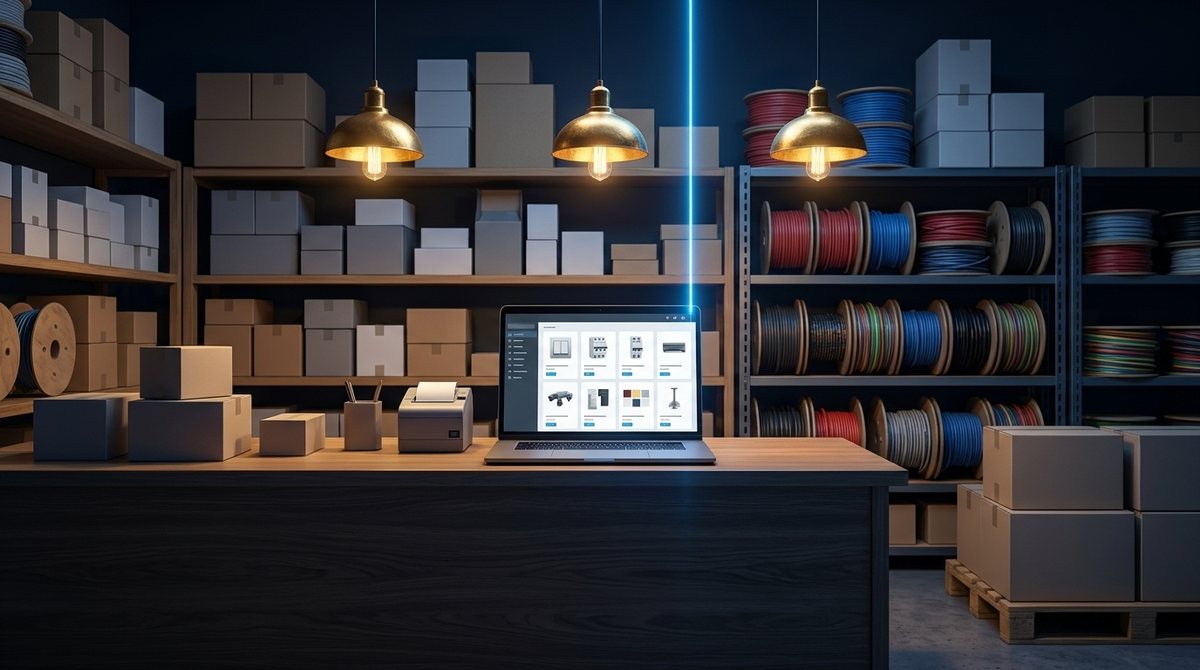
At Shamrock Electrical the store runs alongside a physical trade counter. Shopify carries the online side without drama: checkout, hosting and payments are simply not a problem I spend time on. The time goes into the things Shopify cannot do for you.
The clearest example is AI search. In April 2026 Shamrock was named in 1 of 10 buyer questions we tested. By June it was the first of five retailers ChatGPT named for wall-mounted smart electric radiators in Ireland. That happened quickly because the product data in Shopify was already clean, with brand, price, stock and specifications present and consistent, and we added Product and FAQ structured data and buying-guide answers on top of it. Later, after seven comparison guides went live, Bing Copilot citations of the site grew from 226 to 301 between 4 and 7 September. The full record is in the Shamrock Electrical case study.
The same clean data now powers a website chat assistant, live since April 2026, that answers product, price and trade-counter stock questions. None of that is a Shopify feature. Shopify made it possible by keeping the product data in one tidy place.
Is Shopify good for AI search and ChatGPT?
It is a good foundation. Shopify builds your sitemap, lets you edit robots.txt and can list products in ChatGPT, but most stores still need better structured data.
Shopify generates a sitemap automatically and lets you edit your robots.txt file, so AI crawlers can reach the store if you let them. Most current themes output some Product structured data, but it is often thin: no brand identifiers, no reviews, no FAQ answers. Those gaps decide whether ChatGPT, Google AI or Perplexity can compare your products with a competitor’s.
Shopify is also moving products directly into AI assistants. Its Winter ‘26 Edition introduced Agentic Storefronts, which make products discoverable in ChatGPT, Copilot and Perplexity, with other channels to follow. Availability differs by country and platform, so check the sales channels in your Shopify admin.
Being eligible is not the same as being recommended. The engines still pick the stores whose product data they can trust. Our guide to AI search optimization for ecommerce covers what to fix, and the Shopify SEO package does that work on an existing store for €1,500.

Should I set up my Shopify store myself or pay someone?
Set it up yourself if you have time and a small catalogue. Pay someone if your time is worth more, your catalogue is large, or you are migrating.
Shopify’s setup guides are good, and a simple store with a dozen products is a weekend’s work for a careful owner. Where people get caught is shipping rates that lose money on heavy items, tax set for the wrong country, product pages with a photo and a price and nothing else, and migrations that skip the redirects.
If you would rather hand it over, our Shopify store setup service builds the store for you from €4,500 with no VAT added: store setup, theme, up to 50 products created, Product schema and an AI crawler check, with the store transferred into your name at launch. When we build a store, Shopify pays Clever Merchants a share of that store’s subscription as a Shopify Partner. You pay Shopify the same price either way.
Frequently asked questions
Is Shopify worth it for a small business?
Yes, if you sell physical products and want your own store rather than a marketplace. Basic costs €32 a month in Ireland or $39 in the US, and the fees on each sale are lower than Etsy’s.
Is Shopify worth it for beginners?
Yes. It is one of the easiest platforms to start on, and three days free followed by €1 a month for three months is a cheap way to find out.
How much does Shopify take per sale?
On Basic with Shopify Payments, 2% plus €0.25 per online card sale in Ireland, or 2.9% plus 30¢ in the US. With another payment provider, Shopify adds 2% on top of that provider’s fee.
Is Shopify cheaper than WooCommerce?
Not always on paper, because WooCommerce itself is free. Once you add hosting, a theme, paid extensions and someone to keep it updated and secure, the gap usually closes or reverses.
Should I start on Etsy or Shopify?
Start on Etsy if you are testing whether anyone wants what you make, because it brings buyers and costs nothing up front. Move to Shopify when you want your own customers and lower fees per sale.
Does Shopify help with SEO and AI search?
It gives you a sound base, with an automatic sitemap, an editable robots.txt and product listings in AI assistants. Most stores still need fuller structured data and answer-first product content to be recommended.
Shopify is worth it for most product businesses. Whether it is worth it for yours comes down to the numbers in this post and how much of the setup you want to do yourself.
See the Shopify store setup service, from €4,500, or if you already have a store, check how visible it is in AI search for free.