
TL;DR
- Most staff need a short foundation, not a course catalogue: what AI tools are good and bad at, how to give them context, how to check their output and which information never goes in
- Beyond that, AI training should follow the job, and the role table below sets out what each person needs
- Free and low cost options exist: Skillnet Ireland’s Upskill SME Training Grant, the UK’s AI Skills Boost, Canada’s National AI Literacy Initiative, Australia’s free TAFE NSW microskills, plus free courses from OpenAI and Anthropic
- Training on its own rarely changes how work gets done, because time is saved by changing specific tasks, not by learning in general
- Pick two or three workflows first, then train people on those; the free AI Readiness Review names them in about three minutes
- Clever Merchants does not run AI training courses or workshops, so there is nothing to sell you here
AI training for business works when it teaches staff to do their own jobs better with AI, not when it teaches AI in general. For an owner-managed business, that usually means a few hours of free foundation learning for everyone, followed by practice on the two or three tasks where AI will actually be used, with clear rules about checking the output and protecting data.
I run Clever Merchants, an AI consultancy in Dublin that works remotely with owner-managed businesses of roughly 5 to 50 staff in Ireland, the UK, the US, Canada, Australia and New Zealand. We do not run training courses, so this is an independent guide: what staff need to learn by role, the free and low cost options I checked on their own websites on 14 September 2026, and why the order you do things in matters more than which course you pick.
If you want to know which tasks your team should be trained on first, the free AI Readiness Review takes about three minutes and gives you an instant report.
What is AI training for business?
Teaching staff to use AI tools safely and usefully in their own jobs: what the tools do well, where they fail, and what stays out.
It is a different thing from the AI courses aimed at careers in data science or building models. A plumbing firm, an accountancy practice or an online shop does not need anyone who can train a model. It needs the people who answer enquiries, write quotes and keep the books to use tools like ChatGPT, Claude, Gemini or Microsoft Copilot without creating new problems.
The UK’s skills body has written down what that foundation looks like. Its AI Foundation Skills for Work benchmark, published by Skills England in January 2026, includes understanding the risks and consequences of using AI, creating prompts and adapting settings for generative AI tools, and automating routine tasks with AI tools. That is a sensible checklist for any small business, wherever it is based.
What do staff actually need to learn about AI?
What AI tools are good and bad at, how to give them context, how to check their output, and which information never goes in.
1. What the tools are good and bad at. Generative AI is good at drafting, rewording and summarising text you give it. It is poor at facts and figures it has not been given. OpenAI, the company behind ChatGPT, says hallucinations, plausible but false statements, remain a fundamental challenge for all large language models, including its own. Staff who know this check the right things.
2. How to give the tool context. “Reply to this customer” gets a generic answer. The job details, the tone you use, and what the reply must not promise get a usable one. OpenAI Academy’s AI Foundations course lists prompting, context and responsible use as its core topics, which is the right emphasis.
3. How to check the output. New Zealand’s business.govt.nz recommends a human in the loop model: a person operates the AI tool, checks its outputs and makes the final decisions. In practice that means checking every figure, name, date and promise before anything leaves the business.
4. Which information never goes in. Passwords and bank details never. Customer and staff personal data, and confidential commercial information, only in a business account your organisation controls. Ireland’s Data Protection Commission tells organisations using AI products to understand what personal data a tool uses, where it goes and whether the provider keeps or reuses it. There is a fuller list on our generative AI consulting page.
What AI training does each role in a small business need?
Everyone needs the same short foundation. Beyond that, training follows the job: owners choose and govern, office staff draft and check, field staff capture notes.
| Role | What to learn | A good first exercise | Can skip for now |
|---|---|---|---|
| Owner or manager | Where AI pays in the business, which tools and accounts staff may use, the data rules, how to judge a vendor’s or consultant’s claims | Write a one-page rule on which AI tools and which information are allowed | Prompting tricks and technical detail |
| Office and admin | Drafting and rewording, summarising documents and email threads, checking output against the source | Summarise a long supplier email thread, then check each point against the original | Building automations |
| Sales and customer service | Drafting replies from approved information, keeping the tone consistent, spotting a reply that promises too much | In a business account, draft replies to five past enquiries with names and contact details removed, and compare them with what was actually sent | Chatbot set-up |
| Finance and bookkeeping | Writing commentary on figures, why AI should not be trusted with the arithmetic, what stays inside the accounts system | Have AI write the commentary on last month’s report, with every figure taken from the report itself | Anything that involves pasting bank or payroll data |
| Field staff and site teams | Turning voice notes and photos into job notes, safe use on a phone, what not to record | Dictate a site visit note and have AI turn it into a job summary for the office to check | Desk-based drafting courses |
| Whoever looks after your software | Business account settings, data controls, AI features inside the tools you already pay for | Review the data settings on every AI tool the business uses | Coding, unless a build needs it |
Treat the table as a starting point. In a six-person business one person may cover three of those rows, and the exercises matter more than the job titles: each one is a real task, done with real material, with a check at the end.
Do businesses in the EU have to train staff on AI?
EU businesses using AI must support their staff’s AI literacy under Article 4 of the AI Act, but no certificate or specific course is required.
This section applies to businesses in Ireland and the rest of the EU. The European Commission’s AI literacy questions and answers, last updated on 27 July 2026, says Article 4 has applied since 2 February 2025 and covers organisations that use AI systems as well as those that build them. It also explains that amendments made by the Digital Omnibus on AI came into force in mid-July 2026: AI literacy remains an obligation, but no specific or “sufficient” level is mandated, and the emphasis moves to the Commission and Member States promoting AI literacy. Organisations deploying high-risk AI systems must still make sure their staff are trained to provide human oversight.
The same page answers the question most small businesses will ask. A company whose employees use ChatGPT for tasks such as writing advertisement text or translating does need to comply, and the Commission says those employees should be informed about the specific risks, giving hallucination as the example.
For an owner-managed business using everyday AI tools, a sensible reading is simple: give staff the foundation above, write down the rules, and keep a note of what training and guidance you provided. This is not legal advice, so check anything specific to your sector with your own adviser.
What free AI training is available for small businesses?
Government-backed options exist in Ireland, the UK, Canada and Australia, and OpenAI and Anthropic both publish free online courses anyone can take.

Everything below was checked on the provider’s own page on 14 September 2026. Programmes change, so confirm eligibility and dates before you plan around them.
Ireland
Skillnet Ireland’s Upskill SME Training Grant helps small and medium-sized businesses reclaim salary costs while staff train in AI skills. The grant is EUR 204.30 per training day per employee, for businesses registered and operating in Ireland for at least 12 months, and the training categories include Getting Started With AI, Using AI in Your Business, and AI Governance, Risk, Ethics and Compliance. When I checked, the page said portal access and registration details would be provided soon. Beyond the grant, Skillnet Ireland’s business networks offer subsidised upskilling programmes to member companies by sector and region. For the wider picture of funding, see our guide to AI grants in Ireland.
United Kingdom
AI Skills Boost is a free training offer backed by Skills England and the Department for Science, Innovation and Technology, built with industry partners including Microsoft, Google, Amazon, IBM, Sage and Intuit. Courses take anywhere from 20 minutes to a day, the current focus is on skills for small and medium-sized businesses, and the stated aim is to upskill 10 million UK workers. According to Skills England, people who complete the foundation skills receive a virtual badge they can add to a CV.
United States
The US Small Business Administration’s guide to AI for small businesses is guidance rather than a course, but it is a useful free starting point to share with staff. It advises starting small, testing free tools to see whether they add value, having another person review everything AI produces, and trying not to feed AI tools sensitive data or proprietary information.
Canada
The Government of Canada launched a National AI Literacy Initiative with the Alberta Machine Intelligence Institute (Amii) on 9 September 2026, with all learning provided at no cost to participants. Workers can find short AI training through Job Bank’s Training Finder now, and a course called AI for All: Essentials for Canadians is due to launch nationally through community partners later in 2026.
Australia
The National AI Centre’s training page lists free, self-paced TAFE NSW microskill courses, including Introduction to Artificial Intelligence, Generative AI and its Business Applications, and Responsible AI. It also links to free learning modules from the Australian Government’s Digital Solutions Program, such as Automating Repetitive Tasks in Your Business, and to a course on AI safety and cyber security risks written for small business owners and employees.
New Zealand
business.govt.nz has a practical getting started with AI guide that recommends making the most of free training, trialling AI on one repetitive task, and prioritising employee training once your processes for responsible use are in place. For businesses ready to go further, MBIE says its AI Advisory Pilot, delivered through the Regional Business Partner Network, offers eligible businesses co-funding of up to 50% (up to NZ$15,000) to work with experts on AI opportunities, and runs until 31 January 2027. That is advisory support rather than a course.
Free courses from the AI companies themselves
The companies that make the tools also publish free training, and it is often the quickest way to get a team through the foundation.
OpenAI Academy. OpenAI’s help centre describes free, self-paced courses that anyone with a ChatGPT account can take. AI Foundations covers AI basics, prompting, context and responsible use in an estimated 60 to 75 minutes. Applied AI Foundations, 75 to 90 minutes, covers building repeatable workflows with review points. AI Leadership, about 180 minutes, covers priorities, governance and roadmaps, which suits owners and managers. OpenAI notes that its badges are not certifications.
Anthropic. AI Fluency: Framework and Foundations is a free course from the company behind Claude, built around four skills it calls delegation, description, discernment and diligence, and developed with academic experts including University College Cork. Learners can take a final assessment for a certificate of completion.
Vendor courses teach on their own products. The underlying skills transfer between tools, but make sure staff practise in the tools and accounts your business actually uses.
Why does AI training on its own rarely change how work gets done?
Because courses teach general skills, but time is saved by changing specific tasks, and often nobody is given responsibility for changing them.

Boston Consulting Group’s report From Potential to Profit: Closing the AI Impact Gap found that the companies creating real value from AI focus on a small set of initiatives, change core processes, upskill their teams and measure the returns. BCG describes a 10-20-70 principle: 10% of the effort on algorithms, 20% on data and technology, and 70% on people, processes and cultural change. Training sits inside that 70%, but it is not the whole of it.
A general course leaves four gaps a small business has to close itself:
- No task has been chosen. Staff know how to prompt but have not agreed which part of their week AI should take on.
- No rules have been written. Without a list of approved tools and forbidden data, careful staff avoid AI and careless ones paste in things they should not.
- No time has been set aside. Learning a new way to do a familiar task is slower the first few times, and busy weeks win.
- Nobody is measuring. If no one knows how long the task took before, no one can tell whether the training changed anything.
None of these is solved by a better course. They are solved by deciding what the training is for before anyone starts it.
How do you make AI training specific to your business?
Choose two or three workflows first, write down how each is done today, then train the people who do that work on the AI version.
- Pick the workflows. Start with the repeated tasks that take the most hours: enquiry replies, quotes, invoice chasing, weekly reports. Our AI readiness checklist helps you find them.
- Write down the current steps. Who does it, in which software, and what rules sit in someone’s head. This becomes the training material.
- Give everyone the foundation. One of the free courses above, in the first week.
- Practise on the real task. Use past examples with personal details removed, in the business account staff will actually use.
- Name the check and the owner. Decide who reviews AI output for that task and who keeps the rules current.
- Measure after a month. Compare the hours the task takes now with what it took before.
Some workflows can be handled by staff with the tools you already have, and training is all they need. Others cross several systems or need approval steps, and that is where a built workflow earns its cost; our AI implementation services page explains what that involves. The AI readiness assessment guide covers the people side in more depth.
How the AI Readiness Review turns training into a short list
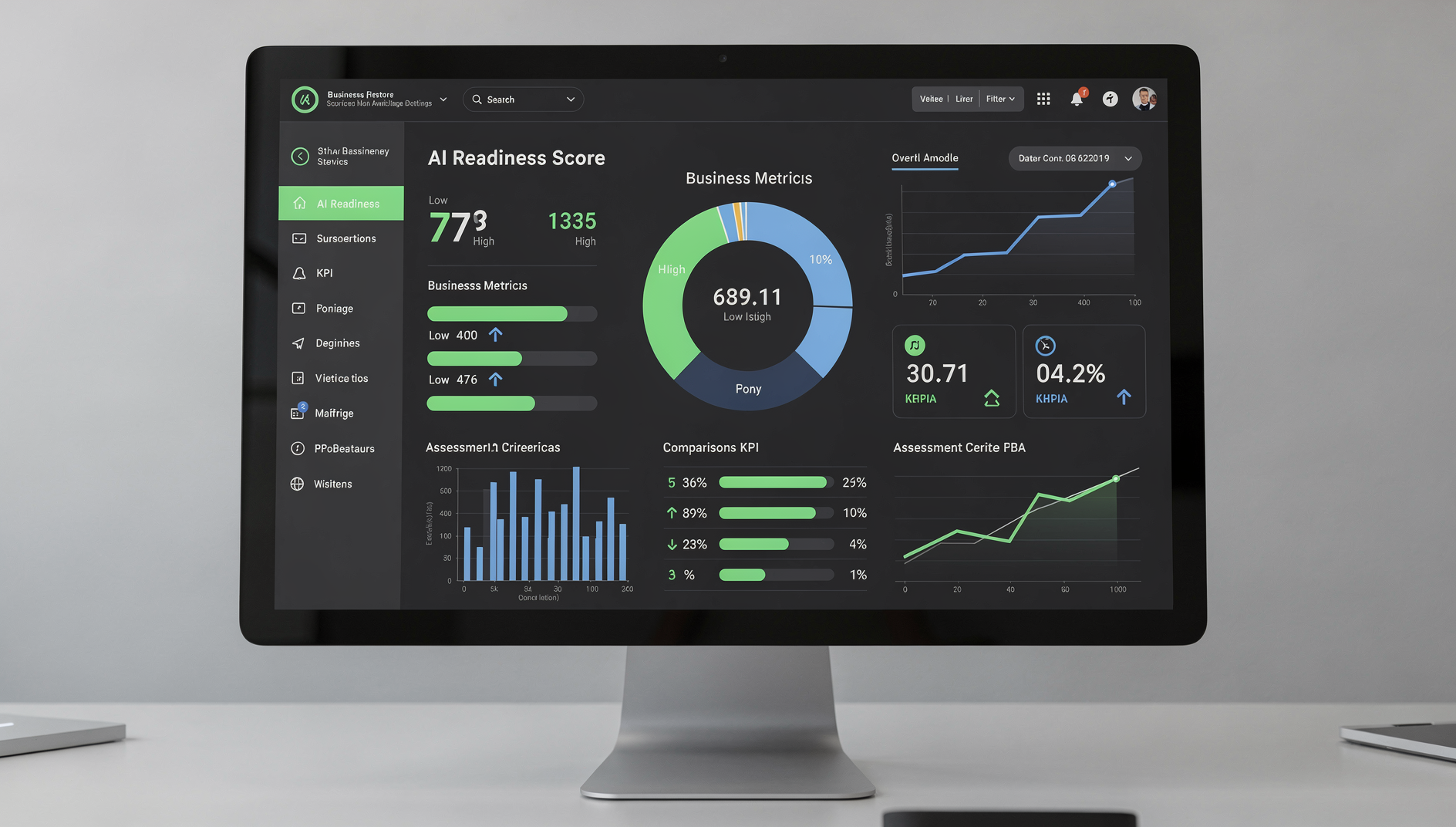
The AI Readiness Review is the free first step we offer, and its mechanics map directly onto the six steps above. It asks six questions about your industry, team size, revenue and challenges, takes about three minutes, and returns an instant report naming the two or three highest-impact AI workflows for a business like yours, with an estimate of hours saved per week for each.
Used as a training plan, each workflow in the report is a training topic, the people who do that work today are the ones to train first, and the hours estimate is the number to check against a month later. I follow up personally within 24 hours to talk through the report, and if the honest answer is that a free course and some practice will cover it, that is what you will hear.
How much time should staff spend on AI training?
Not long for the foundation: the free courses above take from twenty minutes to about a day each. Practice on real tasks matters more.
The published course lengths give a sense of scale. OpenAI estimates 60 to 75 minutes for AI Foundations and about three hours for AI Leadership, and AI Skills Boost courses run from 20 minutes to a day. A workable plan for most small teams is the foundation in the first week, then a short, regular slot practising on the chosen workflow for a month, with the task owner checking the output.
Budget for the time, not just the course fee. A free course still takes staff away from paid work, which is why Skillnet Ireland’s grant is calculated per training day per employee rather than per course.
Does Clever Merchants run AI training courses?
No, we do not run courses or workshops. When we build a workflow, the people using it get a short handover as part of implementation.
That handover is specific to the workflow: how it works, where it tends to go wrong and what to do when it does. It is not a substitute for the foundation courses above, and we do not sell it on its own.
What we do is the part that comes before and after training: the free review that picks the workflows, then scoping, building, testing and maintaining the ones worth building inside the tools a business already uses. If the workflows involve drafting, summarising or searching documents, our generative AI consulting page explains how that work is set up with human checks and data rules. For the wider picture of what a consultant does and does not do, read what an AI consultant does.
Frequently asked questions
Is there free AI training for employees?
Yes. The UK’s AI Skills Boost is free for everyone, Canada’s National AI Literacy Initiative and Australia’s TAFE NSW microskills are free, and OpenAI Academy and Anthropic publish free self-paced courses that staff anywhere can take.
Should we train staff before or after choosing AI tools and workflows?
Do a short foundation course first, so staff understand the basics and the risks. Save the detailed, hands-on training for after you have chosen the workflows, because it should happen on the tools and tasks people will actually use.
What should an AI policy for staff cover before training starts?
It should list which AI tools staff may use for work, on which accounts, and what information must never go into them. It should also name who checks AI output before anything reaches a customer, supplier or regulator.
Do staff need an AI certificate?
For most owner-managed businesses, no. In the EU, the European Commission’s AI literacy guidance says the AI Act does not require certificates, and keeping a record of the training and guidance you gave is a sensible habit anywhere.
Who should lead AI training in a small business?
Usually the owner or a manager who understands the work, with one person made responsible for the tools and their settings. An outside trainer can deliver a course, but only someone inside the business can decide which tasks change.
Where to start
Start with the tasks, not the course. The free AI Readiness Review takes about three minutes, names the two or three workflows worth focusing on in a business like yours, and I follow up personally within 24 hours. Then use the free training above to get your team ready for exactly those jobs.