
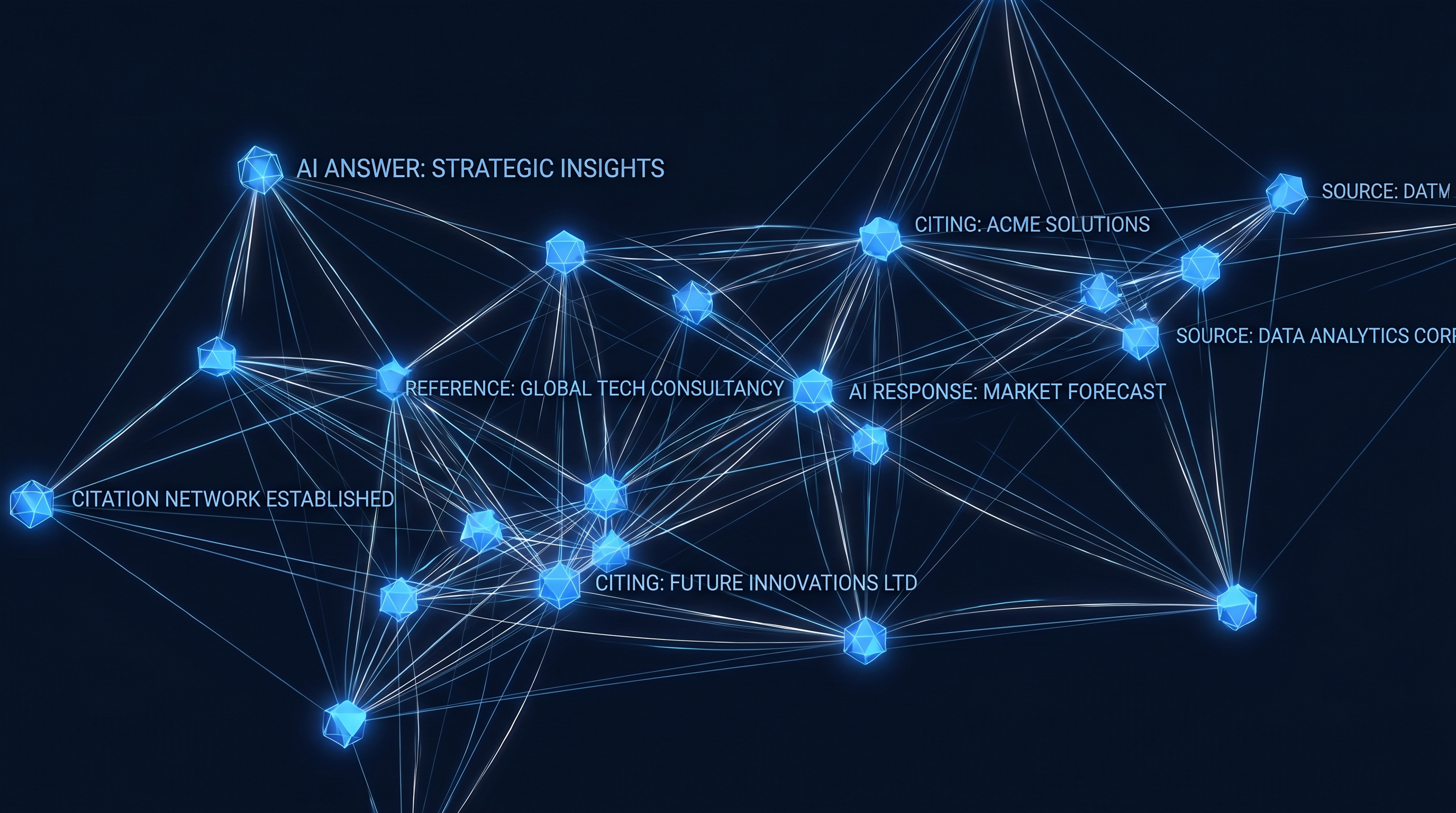
TL;DR
- GEO (Generative Engine Optimisation) is the practice of making your business visible in AI-generated answers from tools like ChatGPT, Perplexity and Google AI Overviews.
- Where SEO targets Google’s blue-link results, GEO targets the AI answer that now appears above them, and that answer typically cites only two or three businesses by name.
- The businesses AI tools cite are not chosen randomly. They follow a logic you can influence with the right structure, content and signals.
Something shifted in how buyers research
A few years ago, a buyer looking for the best electrical supplier in Ireland would open Google, scan the first page of results, and click through to a few websites.
Today, the same buyer opens ChatGPT and types: “Who are the best electrical wholesalers in Ireland?”
They get an answer in 20 seconds. Two or three companies are named. The buyer reads the answer, picks one, and moves on.
That first page of Google results? They never saw it.
This is not a theoretical future scenario. Adobe Analytics reported that AI-driven traffic to retail sites grew 1,200% in the 2025 holiday season compared with the previous year. Shopify noted in their Q3 2025 earnings call that a meaningful share of their merchants were seeing new customers who arrived from AI tools rather than traditional search. The shift is already underway.
The businesses that show up in those AI answers have an enormous advantage. The businesses that do not exist in AI answers are, as far as that buyer is concerned, invisible.
GEO is the discipline of making sure your business is one of the ones that gets cited.
What is Generative Engine Optimisation?
Generative Engine Optimisation is the practice of structuring your website, content and online presence so that AI tools cite your business when buyers ask relevant questions.
The term is modelled on SEO, but the target is different. SEO optimises for search engines that return a list of links. GEO optimises for AI systems that return a direct answer, usually with two or three source citations embedded.
In practical terms, GEO involves four things: adding structured data that AI crawlers can read easily, building a citation footprint across the web, writing content that directly answers the questions buyers ask AI tools, and establishing your business as a recognised entity in the data AI systems are trained on.
When all four are in place, AI tools have what they need to cite you confidently. When any of them is missing, you are easy to overlook.
Why GEO matters right now
The timing matters for two reasons.
First, buyer behaviour is shifting faster than most businesses have noticed. The buyers who used to spend 20 minutes comparing websites now spend two minutes reading an AI answer. If your business is not in that answer, the comparison never happens. You lose before the race starts.
Second, the businesses that establish strong AI citation profiles now will be significantly harder to displace later. AI tools develop preferences based on consistent, credible signals over time. A business with six months of solid GEO work behind it will rank higher in AI responses than a competitor who starts later, even if the competitor spends more. There is a compounding effect to building an entity reputation early.
The window where GEO is a differentiator, rather than a baseline requirement, is closing. It is not closed yet.

GEO vs SEO: the real differences
Most people assume GEO is just SEO with a new name. It is not.
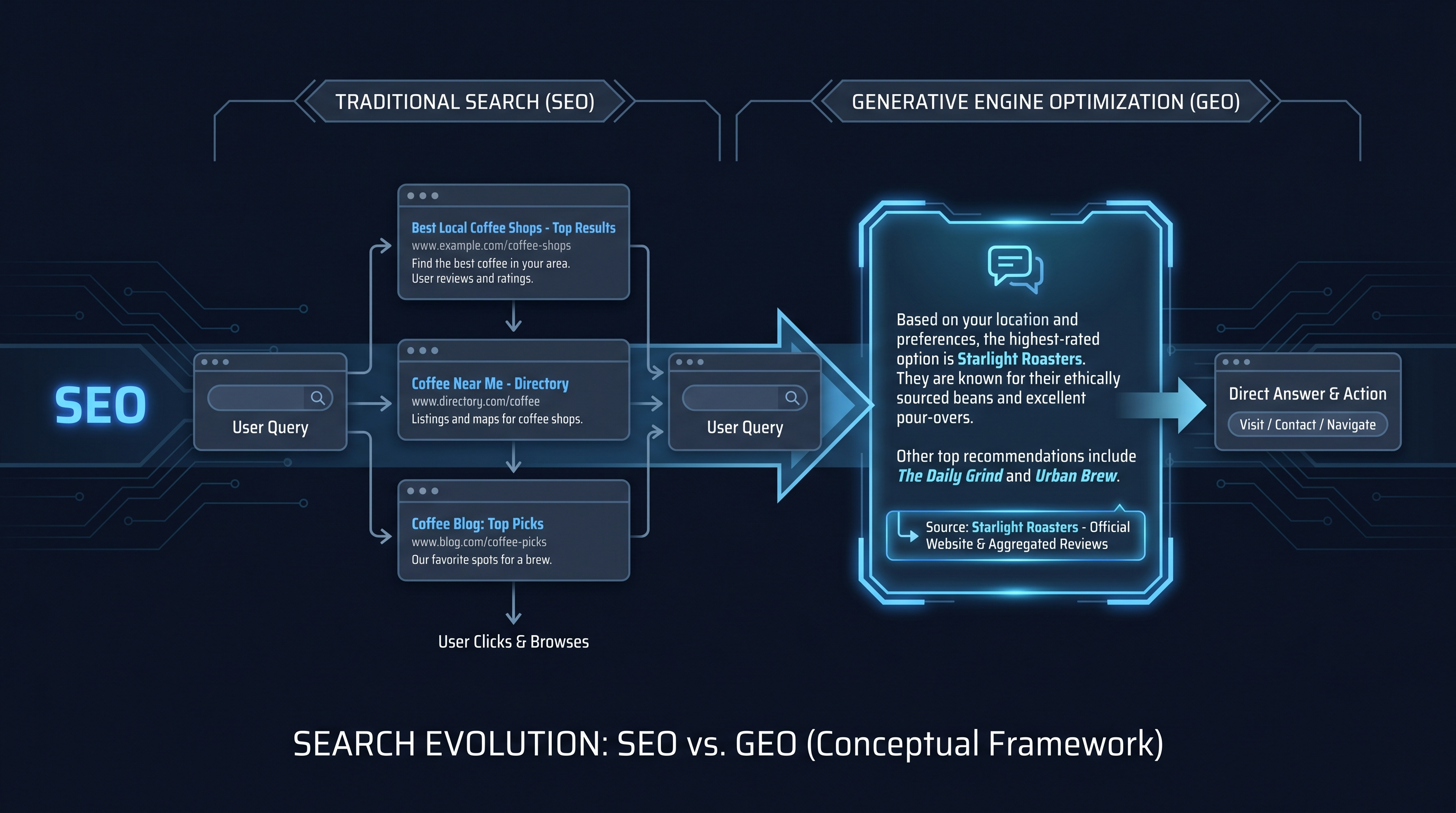
The differences are structural.
What you are optimising for. SEO optimises for ranking positions on a results page where dozens of competitors can appear. GEO optimises for a citation in an answer where typically two or three businesses appear, or none at all.
How winners are determined. In SEO, ranking is driven largely by backlink authority, technical factors and keyword density. In GEO, citation is driven by entity recognition, structured data quality, and whether your content directly answers the specific question being asked.
How you measure success. SEO success is measured in rankings and organic traffic. GEO success is measured in citation frequency: how often your business is named when a relevant query is asked across ChatGPT, Perplexity, and Google AI Overviews.
The content that works. SEO rewards long-form content with broad keyword coverage. GEO rewards precise, question-answering content structured so an AI can extract a clear, citable answer in a few sentences.
None of this means SEO is obsolete. It means the two disciplines are different tools for different surfaces, and a business that only does one of them is leaving significant visibility on the table.
The four pillars of GEO
Every successful GEO implementation rests on the same four foundations.

Structured data and schema. AI crawlers read schema markup before they read body copy. If your site does not have Organisation, Service, FAQPage, and Product schema where relevant, you are asking AI tools to work much harder to understand what you do and who you serve. Most sites have none of these. Adding them is the highest-leverage technical change you can make.
Citation footprint. An AI tool’s confidence in citing your business is partly a function of how many credible sources mention you. That means consistent presence in directories, trade publications, local business listings, and industry bodies. It also means having content on your own site that functions as a citable source: buying guides, FAQs, comparison pages.
Content that answers questions. AI tools are trained to answer questions. The businesses they cite most readily are the ones whose content is structured around questions and answers. FAQ sections, how-to guides, and pages that address specific buyer queries directly are all GEO-positive content formats.
Entity recognition. An entity, in AI terms, is a named thing the system can confidently identify and describe. Your business needs to be an entity: it needs a consistent name, address and contact information across sources, a schema-marked-up website, and ideally mentions in credible external sources. Without entity recognition, AI tools treat your business as an anonymous website rather than a known business they can recommend.
Does GEO replace SEO?
No. They work together.
SEO builds the organic traffic that brings buyers who are still in research mode, scanning multiple options. GEO ensures that when those same buyers turn to AI tools, your name comes up in the answer.
In practice, much GEO work also strengthens SEO. Better schema markup, clearer content structure, and stronger citation profiles all send positive signals to traditional search algorithms as well as AI systems. The work is not wasted on either front.
The simplest mental model: SEO gets you found. GEO gets you cited. Both matter.
Three actions you can take this week
You do not need a full GEO programme to make a start. Three things move the needle quickly.
-
Add Organisation and Service schema to your homepage. This is the single highest-impact technical change most sites can make. If your site runs on WordPress, Squarespace or a similar platform, there are plugins that handle this in under an hour. If you are on Shopify, it requires a theme file edit. The schema tells AI crawlers your business name, category, location, and what you offer.
-
Build a proper FAQ section on your main service or category pages. Write five to eight questions your buyers actually ask, and answer each one directly and in full. Mark the section up with FAQPage schema. AI tools regularly pull verbatim answers from FAQ blocks when responding to buyer queries.
-
Audit your directory and citation presence. Search your business name across Google Business Profile, Yelp, industry directories and any trade body listings. Make sure the name, address and phone number are identical across all of them. Inconsistent information is a signal that weakens entity recognition.
These three steps will not produce overnight citation in ChatGPT. But they establish the foundation that makes everything else work.
Proof it works: Shamrock Electrical
The first business we applied GEO to was Shamrock Electrical, an Irish electrical wholesaler based in Rathcoole, Dublin. Shamrock is owned by myself, and it served as the validation phase before Clever Merchants was launched as a consultancy.
Before the work, Shamrock had reasonable Google SEO performance but was invisible in AI-generated answers. When buyers asked ChatGPT or Perplexity where to buy electric radiators in Ireland, or who the best Irish electrical supplier was, Shamrock did not appear. Competitors did.
The implementation covered schema markup across collection and product pages, FAQ content additions on eight key categories, meta description rewrites, two buying guides, Google Business Profile optimisation, and citation building across Irish business directories. The full programme took less than three weeks.
Seventy-two hours after the schema and content work was published, ChatGPT cited Shamrock by name for buyer queries in its category. Perplexity followed. The exact phrase ChatGPT used:
“Shamrock is the obvious one.”
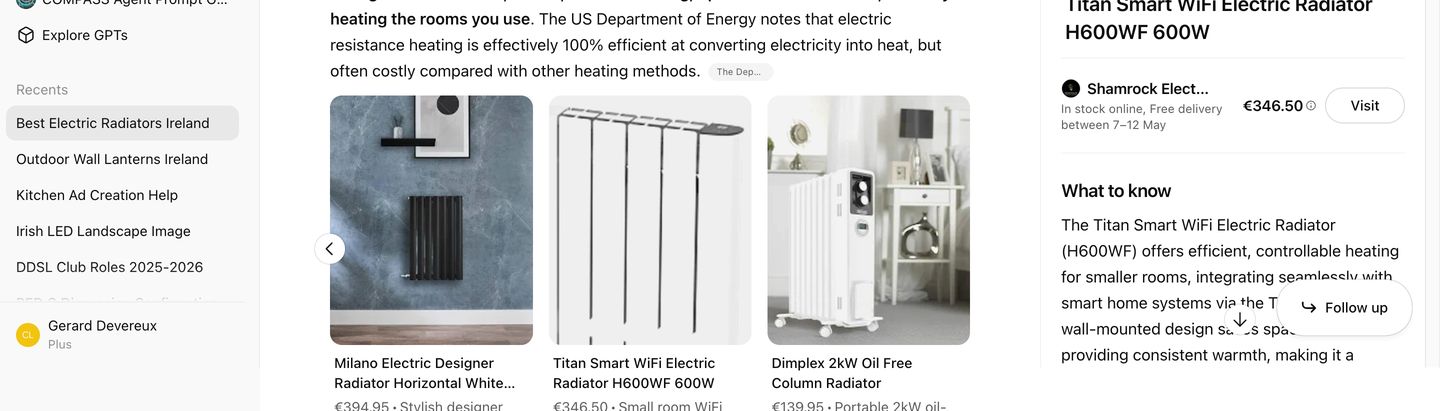
That citation has held. It was not a fluke or a one-time event driven by a specific query format. It reflects a structural change in how AI tools perceived the business.
The same method is now the foundation of both Clever Merchants programmes: GEO Standard for Ecommerce for Shopify and ecommerce stores, and GEO Standard for Service Businesses for B2B service companies. For the full story, see the Shamrock Electrical case study.
Where to start

If you run an ecommerce store, a service business, a professional firm, or any business where buyers search before they buy, AI visibility is now part of the game.
The question is not whether your buyers are using AI tools. They are. The question is whether your business is one of the ones those tools recommend.
If you are not sure where you stand, take the free AI Visibility Check. It is a short form that produces a personalised report on your current AI visibility, what buyers see when they ask about businesses in your category, and where the gaps are.
If you already know you want to act, the two programmes are:
- GEO Standard for Ecommerce: one-time implementation for Shopify and ecommerce stores. 21 working day delivery. 90-day citation guarantee. Starting at €6,500.
- GEO Standard for Service Businesses: one-time implementation for B2B service businesses and professional firms. Same delivery and guarantee. Starting at €7,500.
The businesses that get cited first tend to stay cited. The compounding effect is real. Getting started now, rather than waiting until AI search is fully normalised, is still an advantage.