
TL;DR
- ChatGPT, Perplexity, and Google AI Overviews now influence buying decisions — but most businesses don’t appear in them
- AI systems cite businesses that have clear authority signals: structured data, question-answering content, consistent identity, and third-party mentions
- Traditional SEO rankings don’t automatically translate to AI citations
- Six steps cover the full process: schema, content, NAP consistency, Google Business Profile, citation footprint, and topical authority
- Most businesses see their first AI citations within 4–8 weeks of implementing structural fixes
- Check your AI visibility for free — takes 2 minutes
Why ChatGPT Citations Are Now a Business Issue
A buyer looking for the best commercial electrician in Dublin used to open Google, scan six results, and click two or three websites before deciding who to call.
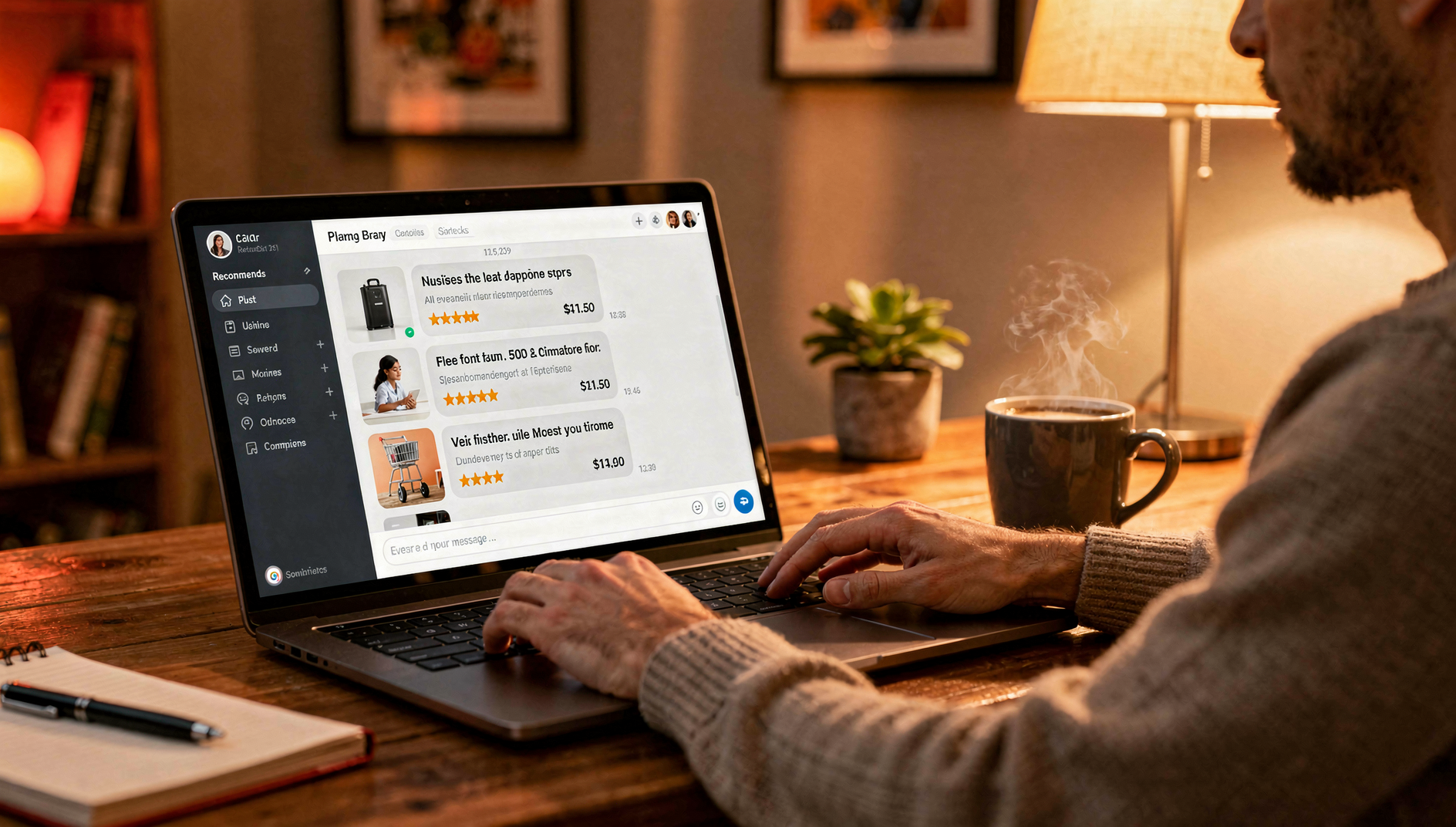
Today, a growing share of those same buyers open ChatGPT and type: “Who is the best commercial electrician in Dublin?” They get a direct answer in thirty seconds. One or two companies are named. The buyer reads it, checks the named company’s website, and makes contact. Your Google ranking never entered the picture.
This is not a future trend. Adobe Analytics recorded a 693% increase in AI-referred retail traffic in 2025. Shopify’s Q3 2025 earnings call noted meaningful growth in orders attributed to AI tools. And a 2024 study found that over 40% of adults under 35 now use AI assistants as part of their research process before purchasing or choosing a service provider.
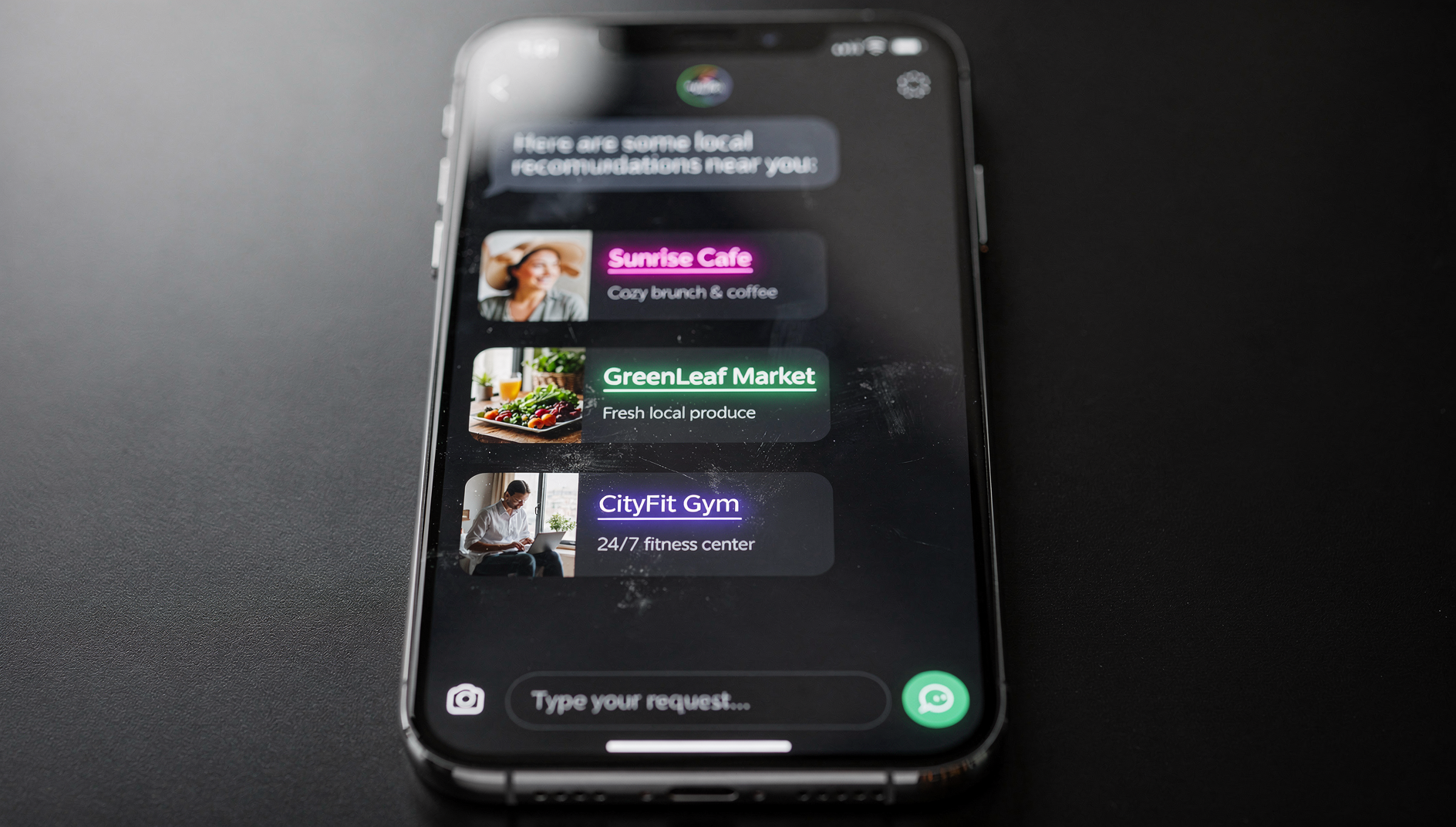
Getting cited by ChatGPT isn’t a vanity metric. It’s a distribution channel — one that most of your competitors haven’t figured out yet. The businesses that appear in these AI answers have a structural advantage. The ones that don’t exist in AI answers are, from that buyer’s perspective, invisible.
How ChatGPT Decides Which Businesses to Recommend
Before covering the steps, it helps to understand what ChatGPT is actually doing when it answers “who are the best [business type] in [location]?”
ChatGPT is not searching the web in real time for most queries. It draws on a vast body of training data — web pages, directories, review sites, news articles, structured data — and generates an answer based on what it has encountered about businesses in that category. The businesses that appear most consistently, with the clearest signals about what they do, who they serve, and where they operate, are the ones that get cited.
This is fundamentally different from traditional SEO. You can rank on the first page of Google and still be invisible to ChatGPT. Four underlying signals drive citation decisions:
Entity recognition — AI systems work with named entities: things they can confidently identify and describe. Your business needs to be a well-defined entity with a consistent name, address, and contact information across your website and every directory that mentions you.
Structured data — Schema markup tells AI crawlers exactly what your business is, what it does, and who it serves. AI systems read structured data before they read your body copy.
Citation footprint — The more credible external sources that mention your business — directories, trade bodies, review platforms, industry publications — the more confident an AI system is that you are a legitimate, established business worth recommending.
Content quality — AI systems are trained to answer questions. Businesses whose websites are structured around questions and answers provide the kind of content AI systems quote from. Thin or generic copy rarely generates citations.
The 6 Steps to AI Citations
Most businesses are missing at least three of the following. The steps build on each other — complete them in order for the fastest results.
Step 1: Add Schema Markup to Your Website
Schema markup is the single highest-impact technical change most businesses can make. It is machine-readable code that tells AI crawlers exactly what type of business you are, what services you offer, where you operate, and what your customers say about you.

At minimum you need:
- Organization schema on your homepage: business name, URL, logo, contact details, and a clear description of what you do
- Service schema on each service or product category page: what the service is, who it is for, and where it is available
- FAQPage schema on any page that has questions and answers
- LocalBusiness schema if you serve a defined geographic area
On WordPress, plugins like Rank Math or Schema Pro handle the basics in under an hour. On Shopify, it requires a theme file edit. On most other platforms, the code can be added directly to page <head> sections. Once schema is in place, use Google’s Rich Results Test to verify it is valid — schema errors are common and silent.
Step 2: Rewrite Key Pages to Answer Buyer Questions
AI systems cite businesses whose content answers the specific questions buyers ask. Most business websites don’t do this.
A typical service page describes what the business offers: “We provide commercial electrical services across Dublin and Leinster. Our team has over 20 years of experience.”
A GEO-optimised service page answers what buyers actually ask: “Who is the best commercial electrician in Dublin?”, “What does a commercial electrical installation cost?”, “How long does a commercial rewire take?”
The difference is structural. The first format is a brochure. The second is a citable source.
Specific changes that reliably improve AI citation rates:
- Add a FAQ section to every service or category page, with five to eight questions your buyers actually ask. Mark it up with FAQPage schema.
- Rewrite your homepage description to state clearly what you do, for whom, in which locations. One precise sentence is worth more than three vague paragraphs.
- Add a buying guide or comparison page to your site. These long-form formats are the ones AI systems most frequently quote from verbatim.
Step 3: Fix Your NAP Consistency
NAP stands for Name, Address, Phone number. For AI systems, it extends to your website URL, email address, and trading name.
If your Google Business Profile lists your business as “Acme Electrical Ltd”, your website says “Acme Electrical”, and a directory listing says “Acme Electric”, you have three conflicting identity signals. AI systems treat this as noise — and it directly reduces citation confidence.
Search your exact business name across Google Business Profile, Yelp, local directories, industry-specific directories, trade body listings, and your social profiles. Make the name, address, and phone number identical across every source. This is not exciting work, but inconsistent NAP data is one of the most common and most correctable reasons a business fails to get cited.
Step 4: Optimise Your Google Business Profile
Google Business Profile data feeds directly into Google AI Overviews, Google Gemini, and increasingly into third-party AI systems that ingest Google’s structured data. A complete, well-structured GBP is one of the fastest ways to improve AI citation rates for local and regional businesses.
Key changes that produce results:
- Categories: choose your primary category with precision. “Electrician” and “Commercial Electrician” are different categories with different citation behaviour. Use the most specific accurate category.
- Services: list every service you provide, with a description for each. These descriptions are crawled and indexed by AI systems.
- Business description: write 750 characters that answer “what does this business do and why should a buyer choose it?” Avoid vague phrases like “dedicated professionals” or “quality service.”
- Q&A section: the Questions and Answers section on GBP is frequently crawled by AI systems. Seed it with your five most common buyer questions and answer each one fully.
Step 5: Build Your Citation Footprint
Even with perfect schema and great content, a business with no third-party mentions is harder for an AI to cite confidently. A business that appears across twenty credible sources — directories, trade bodies, local chambers, review platforms — reads as established and trustworthy.
The more places your business is accurately described and positively reviewed, the stronger your AI citation signal. Each listing should use identical NAP data and link back to your website. The links matter less than the consistent mentions — you are building entity recognition, not link authority.
Start with:
- National and local business directories (Google, Bing Places, Yelp, local equivalents)
- Industry-specific directories and trade body listings relevant to your sector
- Your local Chamber of Commerce
- Any professional accreditation bodies you belong to
- Google reviews, Trustpilot, or sector-appropriate review platforms
Step 6: Build Topical Authority in Your Niche
AI systems learn which entities are authoritative in which domains. A solar installation company that has published detailed content about solar panel selection, installation processes, planning permission requirements, and maintenance — across its own site and in industry publications — builds topical authority that makes it the natural answer when someone asks an AI about solar.

Topical authority is built through specificity and consistency over time. Publishing a comparison page, a buying guide, a detailed FAQ, and a case study in your niche is worth more than a dozen generic blog posts. The goal is to become the most thoroughly documented, most clearly explained source in your specific area.
Who Benefits Most
AI citation opportunities vary by sector, but the pattern is consistent: businesses that do specific, technical work in a defined geography or niche have the clearest path to regular citations.
Trades businesses — electricians, plumbers, solar installers, roofers — are frequently the subject of AI queries from homeowners. “Best solar installer in Cork,” “who should I call for emergency plumbing in Dublin” — these are common queries. Trades businesses with strong review profiles, local schema markup, and FAQ content about their process and pricing get cited regularly.

Professional services — solicitors, accountants, financial advisers, consultants — benefit because AI is increasingly used for “who should I use for X” queries. The businesses that appear are those with detailed service descriptions, clear credentials, and published expertise.
B2B businesses are seeing AI used heavily for supplier research — “best CRM for a 20-person team,” “who provides managed IT services in the Midlands.” Businesses that have documented their methodology, published client results, and answered comparison questions explicitly are getting cited.
What This Looks Like in Practice
Shamrock Electrical had reasonable Google SEO but was invisible in AI-generated answers. Buyers asking ChatGPT or Perplexity who to buy electric radiators from in Ireland received answers naming competitors.
After one round of GEO implementation — schema, content, GBP, and citation building — ChatGPT cited Shamrock by name within 72 hours. The exact phrase: “Shamrock is the obvious one.” Perplexity and Google Gemini followed within days, across multiple product queries.
The Shamrock Electrical case study documents the full process. The mechanism that produced that result is the same six steps outlined in this guide.
How Long Does It Take?
Faster than most businesses expect, but not overnight. The Shamrock result appeared within 72 hours of implementation — that is unusually fast. A realistic expectation is 4–8 weeks from completing the six steps to seeing consistent citations.
Broken down by phase:
Weeks 1–3: Structural fixes — schema markup, NAP consistency, FAQ content. These are the fastest wins and often produce the first citations within 30 days.
Weeks 4–8: Authority building — review generation strategy, directory submissions, content publication. This is where topical authority starts to compound.
Weeks 9–12: Citation verification and gap-filling — testing across ChatGPT, Perplexity, and Google AI Overviews, identifying which query types you’re appearing for and which still need work.
The compounding effect matters more than the initial timeline. A business that builds a strong citation profile now will be significantly harder to displace in 12 months than one that starts later.
Frequently Asked Questions
Does my Google ranking affect my ChatGPT citations?
Indirectly, yes. Strong Google rankings usually indicate some of the same underlying signals — quality content, consistent business information — that also help with AI citations. But ranking well on Google doesn’t guarantee AI citations, and some businesses achieve strong AI visibility without exceptional Google rankings by focusing specifically on the signals AI systems prioritise.
Is this different from traditional SEO?
Yes, meaningfully so. Traditional SEO optimises for keyword matching and link authority to rank in a list of URLs. Generative Engine Optimisation (GEO) optimises for being cited as a trustworthy source by AI systems that synthesise answers. The skills overlap but the tactics differ — schema markup, entity consistency, and answer-format content matter more in GEO than in traditional SEO. Importantly, this work also sends positive signals to Google’s traditional algorithm, so it doesn’t conflict with existing SEO efforts.
Do I need to pay ChatGPT to appear in its answers?
No. ChatGPT citations are not advertising placements. They reflect how confidently the AI can identify your business as a credible answer to a buyer’s query.
Can I do this myself or do I need an agency?
The structural fixes — schema markup, NAP consistency, FAQ content — can be done in-house by a competent website manager. The authority-building work (review strategy, directory submissions, third-party content placement) benefits from specialist knowledge and relationships. Most businesses DIY some of it and bring in specialists for the rest.
Which AI platforms should I focus on?
ChatGPT and Google AI Overviews are the highest-priority platforms by volume. Perplexity is worth targeting because its users tend to be high-intent researchers. The signals that help you get cited on one platform generally help across all of them — there isn’t a separate strategy per platform.
How do I know if I’m currently being cited by ChatGPT?
The free AI Visibility Check tests this for you. Alternatively, ask ChatGPT, Perplexity, and Google’s AI search to recommend businesses like yours in your area — and note whether your name appears.
What’s the difference between GEO and LLM SEO?
They’re terms for the same practice. “LLM SEO” describes the technical focus on how large language models process and cite information. “Generative Engine Optimisation” (GEO) is the broader term covering all AI search platforms. At Clever Merchants, we use GEO as the umbrella term for the full practice.
Ready to Start?
The free AI Visibility Check scans your business against the signals that drive AI citations and tells you exactly what’s missing — in about two minutes.
If you want the full implementation done for you, both Clever Merchants programmes cover the complete six-step process:
- GEO Standard for Ecommerce — one-time implementation for Shopify and ecommerce stores, including schema, content, citation footprint, and a 90-day citation guarantee
- GEO Standard for Service Businesses — the same programme for B2B service companies and professional firms